Steak and Kidney Pie Recipe & Historical Origins: Classic British Pub Fare
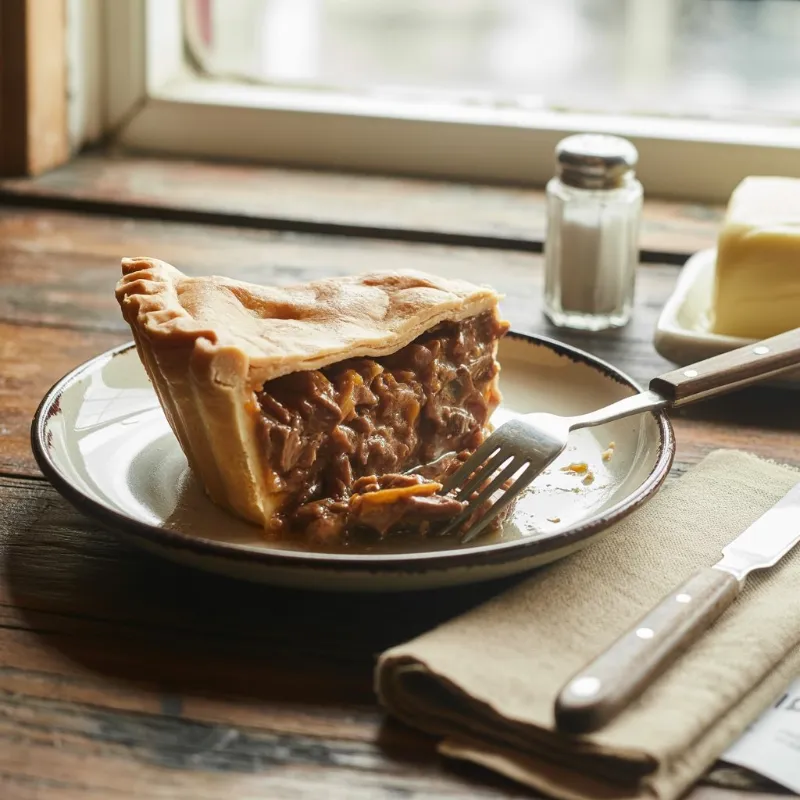
Steak and Kidney Pie Recipe & Historical Origins: Classic British Pub Fare
“Steak and kidney pie is Britain’s boldest comfort food—a hearty celebration of rich, savory flavors that has sustained generations with its satisfying blend of tender beef and robust kidney in golden pastry.”
Steak and kidney pie stands as one of Britain’s most traditional savory pies, combining tender chunks of beef with rich kidney pieces in thick, ale-infused gravy, all encased in buttery shortcrust or puff pastry. This iconic dish represents British working-class cuisine at its finest, providing substantial nourishment with bold, unapologetic flavors. While kidney may seem unusual to modern palates, its distinctive taste adds depth and character that makes this pie truly special. Whether served in traditional pubs or home kitchens, steak and kidney pie embodies centuries of British culinary tradition in every satisfying bite.
Table of Contents
Historical Origins
Steak and kidney pie traces its roots to medieval Britain, when offal consumption was common among all social classes. Kidneys provided affordable protein that, when combined with beef, created filling meals for working families. By the Victorian era, steak and kidney pie had become pub staple, served to laborers who needed substantial midday meals. The combination gained literary fame through references in Charles Dickens’ works and other Victorian literature, cementing its place in British cultural identity.
Traditional recipes called for beef kidneys, though lamb kidneys became popular alternatives. The pie’s golden age lasted through the mid-20th century when organ meats were widely appreciated. Post-war Britain saw steak and kidney pie as quintessentially English comfort food, representing continuity with culinary heritage. Though offal consumption declined in later decades, the dish maintains devoted following among traditionalists and adventurous eaters who appreciate its robust, complex flavors.
Modern versions often reduce kidney quantity to appeal to contemporary tastes, while purists insist on maintaining traditional ratios. The dish has spread to former British colonies—Australia, New Zealand, and South Africa all feature their own versions, though the English original remains the standard against which others are measured.

Best Cuts and Kidney Selection
Chuck steak or braising steak provides ideal texture for steak and kidney pie. These well-marbled cuts become meltingly tender during slow cooking, their connective tissue breaking down into rich gelatin that thickens gravy naturally. Cut beef into 1½-inch chunks—uniform sizing ensures even cooking. Avoid lean cuts like sirloin, which dry out during extended braising required for proper kidney preparation.
For kidneys, beef or ox kidneys offer traditional choice with strong, distinctive flavor. Lamb kidneys provide milder alternative that many find more approachable—they’re smaller, more delicate, and less intensely flavored than beef kidneys. Regardless of type, freshness is crucial. Look for kidneys with deep color, firm texture, and clean smell. Prepare kidneys properly by removing all white cores and membranes, then soaking in milk for 30 minutes to mellow any overly strong flavors.
The traditional ratio is roughly 3:1 beef to kidney, though you can adjust based on preference. First-time makers might start with less kidney (4:1 or 5:1), gradually increasing as they develop taste for the ingredient. Some modern recipes use only token amount of kidney for flavor while keeping beef dominant—this compromises authenticity but creates more accessible version.
Essential Ingredients and Their Roles
For the Filling:
- 1½ pounds beef chuck or braising steak, cut into 1½-inch cubes
- 8 ounces beef or lamb kidneys, cleaned and cut into bite-sized pieces
- 3 tablespoons vegetable oil or beef drippings
- 2 large onions, sliced
- 8 ounces mushrooms, quartered
- 3 cloves garlic, minced
- 3 tablespoons all-purpose flour
- 1½ cups beef stock
- 1 cup dark ale or stout
- 2 tablespoons tomato paste
- 2 tablespoons Worcestershire sauce
- 2 bay leaves
- 2 teaspoons fresh thyme (or 1 teaspoon dried)
- 1 teaspoon anchovy paste (optional but traditional)
- Salt and black pepper to taste
For the Pastry:
- For shortcrust: 2½ cups all-purpose flour, 1 cup cold butter, pinch salt, 6-8 tablespoons ice water
- Or use store-bought puff pastry (1 sheet)
- 1 egg, beaten (for egg wash)
Pie Recipe and Preparation Techniques
Step 1: Prepare the Kidneys
Cut kidneys in half and remove all white cores, tubes, and membranes using sharp knife—this preparation is essential for removing any bitter flavors. Cut cleaned kidneys into bite-sized pieces. Place in bowl, cover with milk, and refrigerate for 30 minutes. This soaking mellows strong flavors while maintaining kidney’s characteristic taste. Drain and pat dry before cooking. Proper kidney preparation separates excellent pie from unpleasantly strong one.
Step 2: Brown the Meats
Heat oil in large Dutch oven over medium-high heat. Working in batches, brown beef cubes on all sides until deeply caramelized, about 8-10 minutes per batch. Transfer to plate. Add kidneys and brown quickly, about 2-3 minutes—kidneys shouldn’t be cooked through at this stage. Transfer to separate plate. Proper browning develops fond that enriches gravy significantly. Don’t rush this step despite temptation.
Step 3: Build the Gravy
Reduce heat to medium. Add onions to pot and cook 8-10 minutes until softened and golden. Add mushrooms and cook until they release moisture and begin to brown, about 5 minutes. Stir in garlic and cook 1 minute. Sprinkle flour over vegetables and stir constantly for 2 minutes to cook raw flour taste. Pour in stock and ale, scraping up all browned bits from pot bottom. Add tomato paste, Worcestershire sauce, bay leaves, thyme, and anchovy paste if using. Stir until smooth.
Step 4: Braise Until Tender
Return beef (but not kidneys yet) to pot along with any accumulated juices. Bring to simmer, then reduce heat to low, cover, and cook gently for 1½ hours until beef is nearly tender. Add kidneys and continue cooking 30 minutes more until both meats are fork-tender. The staggered addition prevents kidneys from becoming tough—they cook faster than beef and overcooking ruins their texture.
Step 5: Thicken and Season
Remove lid and simmer 15-20 minutes to reduce gravy to thick, glossy consistency that coats meats heavily. Season generously with salt and black pepper—the filling should taste slightly over-seasoned as pastry will balance flavors. Remove bay leaves. Transfer filling to bowl and cool completely before assembling pie. Hot filling creates soggy pastry, so patience here ensures crisp crust.
Step 6: Assemble and Bake
Preheat oven to 400°F. If using shortcrust pastry, divide dough in half. Roll one portion and line deep pie dish. Add cooled filling. Roll remaining dough for top crust, place over filling, trim excess, and crimp edges to seal. Cut steam vents in top. If using puff pastry, simply top filled dish with pastry sheet, seal edges, and vent. Brush generously with beaten egg for golden finish. Bake 35-40 minutes until pastry is deep golden brown and filling bubbles through vents. Rest 10-15 minutes before serving.
Regional and Cultural Variations
London-style steak and kidney pudding uses suet pastry and steams rather than bakes, creating softer, more bread-like crust. Lancashire versions sometimes include oysters, reflecting coastal traditions when oysters were cheap protein. Scottish variations might incorporate whisky in the gravy instead of ale, adding distinctive smoky notes. Australian meat pies often include kidney in smaller proportions, creating accessible version for modern palates.
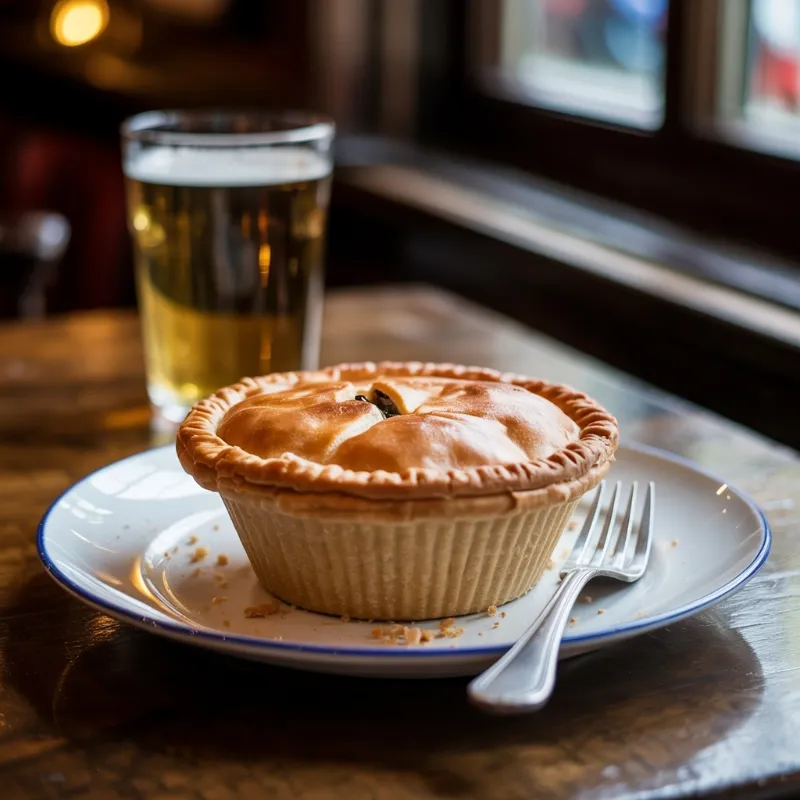
Some regional recipes add hard-boiled eggs to the filling, while others incorporate root vegetables like turnips or swedes. Modern fusion versions experiment with red wine instead of ale, creating more refined flavor profile. Gastropubs often serve individual portions in small dishes with decorative pastry tops, elevating traditional working-class fare to fine dining presentation.
Serving Suggestions
Serve steak and kidney pie with traditional British accompaniments. Creamy mashed potatoes provide classic pairing, their smooth texture contrasting with chunky filling. Mushy peas offer authentic pub-style side, while buttered carrots or green beans add color and freshness. A rich onion gravy served alongside allows diners to add extra sauce as desired. Crusty bread or chips (fries) complete the traditional pub plate.
For proper pub experience, pair with British bitter, brown ale, or stout—the malty flavors complement rich meat filling beautifully. Full-bodied red wines like Shiraz or Malbec work well for those preferring wine. Serve while still warm, allowing filling to be hot but not scalding. The pie should hold its shape when cut but remain moist and saucy inside.
Storage and Reheating Options
Store leftover pie covered in refrigerator for up to 3 days. Reheat individual portions at 350°F for 20-25 minutes until heated through, covering loosely with foil to prevent over-browning. The filling can be made 2-3 days ahead and refrigerated, then assembled in pastry and baked fresh—this staged approach actually improves flavor as filling has time to mellow and develop.
Freeze unbaked assembled pie for up to 2 months. Wrap tightly in plastic wrap, then foil. Bake from frozen, adding 20-25 minutes to cooking time and covering edges with foil to prevent burning. Alternatively, freeze just the filling for up to 3 months, then thaw and assemble fresh before baking. This maintains optimal pastry texture while providing make-ahead convenience.
Tips for Perfect Steak and Kidney Pie
Don’t skip soaking kidneys in milk—this simple step removes any overly strong or bitter flavors while maintaining the ingredient’s characteristic taste. Fresh milk works best; discard soaking liquid rather than using it in recipe. Properly prepared kidneys taste rich and savory rather than overwhelmingly strong.
Add kidneys halfway through cooking rather than at the beginning. Kidneys cook faster than beef and become tough and rubbery when overcooked. The staggered addition ensures both meats reach perfect tenderness simultaneously. This timing detail separates excellent pie from disappointing one with tough, unpleasant kidney pieces.
Create thick, reduced gravy before assembling pie. The filling should barely flow when spooned—watery filling creates soggy bottom crust and messy servings. If gravy seems thin after braising, remove meats temporarily and reduce sauce vigorously before recombining. Proper consistency ensures structural integrity and concentrated flavors.
Common Mistakes to Avoid
Don’t use poor-quality or old kidneys, which can taste unpleasantly strong or bitter. Fresh kidneys from reputable butcher make all the difference. If kidneys smell ammonia-like or have slimy texture, discard them—no amount of preparation will salvage old organ meat. Quality ingredients are essential for this traditional dish.
Avoid overcooking kidneys, which makes them tough and rubbery with unpleasant texture. Kidneys should be just cooked through, remaining slightly pink in the center—they’ll finish cooking during pie baking. Overcooked kidney ruins the entire dish and reinforces negative perceptions about organ meats.
Don’t use watery ale or weak stock, which create bland filling. Choose full-bodied dark ale or stout with character, and use rich beef stock (homemade if possible). The braising liquid forms your gravy’s flavor foundation—weak liquid produces weak pie. Quality liquid ingredients directly correlate with final dish quality.
Avoid assembling pie with hot filling, which steams pastry from inside, creating soggy, unappetizing crust. Cool filling to room temperature or refrigerate before topping with pastry. This patience ensures crisp, flaky crust that contrasts beautifully with rich filling—the textural interplay is essential to proper steak and kidney pie.
Conclusion
Steak and kidney pie represents British culinary heritage at its most authentic and unapologetic. The combination of tender beef and rich kidney creates complex, deeply satisfying flavors that reward adventurous eaters willing to embrace traditional ingredients. While kidney may challenge modern sensibilities, properly prepared it adds irreplaceable depth that elevates this beyond ordinary meat pie. Whether you’re honoring British ancestry or exploring classic pub cuisine, mastering steak and kidney pie connects you to centuries of culinary tradition.
This hearty dish proves that humble ingredients, treated with respect and skill, create memorable meals that nourish both body and spirit. The rich gravy, tender meats, and golden pastry combine to deliver comfort food that has sustained British working people through generations—a testament to the enduring appeal of honest, well-prepared food.


