Vanilla Cream Pie: History, Origins, Key Ingredients, Regional Variations
Vanilla Cream Pie: History, Origins, Key Ingredients, Regional Variations
“Vanilla cream pie proves that simplicity, when executed perfectly, needs no embellishment.”
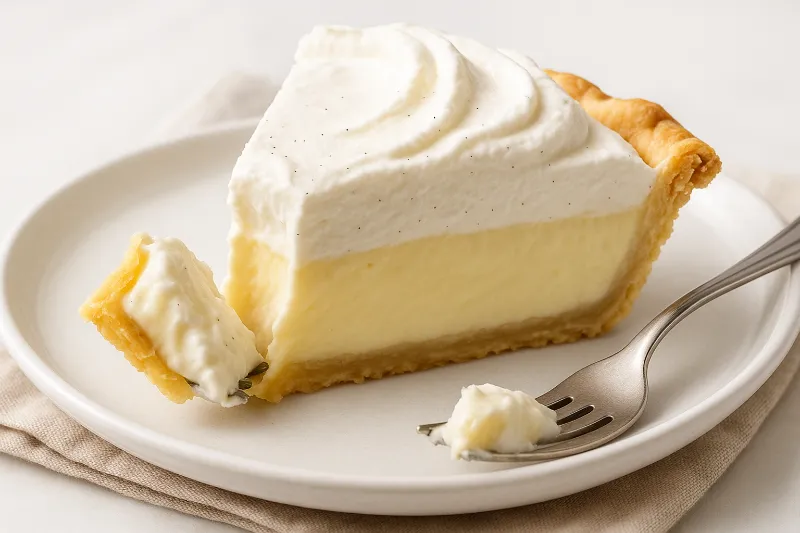
Vanilla cream pie is an elegant American dessert featuring a smooth vanilla custard filling in a buttery crust, topped with whipped cream and often garnished with vanilla bean specks.
Often overlooked in favor of its chocolate or fruit-based cousins, vanilla cream pie represents the pinnacle of classic American pie-making, showcasing the pure, sophisticated flavor of quality vanilla in its most refined form.
This timeless dessert emerged in the late 19th century as vanilla beans became more accessible to American bakers, and it quickly became a benchmark by which pie-making skills were judged. The pie’s apparent simplicity belies the technique required to create its perfectly smooth, rich custard and achieve the delicate balance of sweetness and vanilla flavor that defines an exceptional vanilla cream pie.
Table of Contents
Historical Origins and Cultural Significance
Vanilla cream pie’s history is closely tied to the vanilla trade and America’s culinary development in the late Victorian era. Vanilla, derived from orchids native to Mexico, was introduced to European bakers in the 16th century but remained prohibitively expensive until the mid-19th century when hand-pollination techniques were developed, allowing cultivation in Madagascar, Tahiti, and other tropical regions. By the 1880s, vanilla had become more affordable and available in American markets, though it remained a premium ingredient that signaled quality and refinement.
The pie first appeared in American cookbooks during the 1890s, often simply called “cream pie” or “custard pie,” with vanilla being implied as the default flavor before chocolate and other variations became popular.
Early recipes reflected French influence on American baking, using techniques from crème pâtissière (pastry cream) adapted for pie-making. The pie became associated with skilled baking because its plain appearance meant that any imperfections in texture, consistency, or flavor were immediately apparent—there were no chocolate or fruits to mask mistakes.
During the early-to-mid 20th century, vanilla cream pie earned a reputation as a “Sunday pie,” often served at church socials and family gatherings where accomplished bakers could showcase their skills.
The pie’s golden age coincided with the flourishing of American diners and roadside restaurants in the 1940s and 1950s, where it became a standard menu item alongside its more flamboyant chocolate and coconut cream cousins. Distinguished establishments often used real vanilla beans rather than extract, marking their pies as premium offerings. Today, vanilla cream pie maintains its status as a classic test of baking prowess, with high-quality versions commanding respect in artisan bakeries and traditional diners alike.
Key Ingredients and Their Roles
Vanilla cream pie’s excellence depends on the quality of its few essential components. The crust is typically a traditional flaky pastry made from flour, butter, salt, and cold water, though graham cracker crusts have become popular alternatives. The pastry crust must be blind-baked until fully golden and crisp to provide textural contrast and prevent sogginess from the moist custard filling.
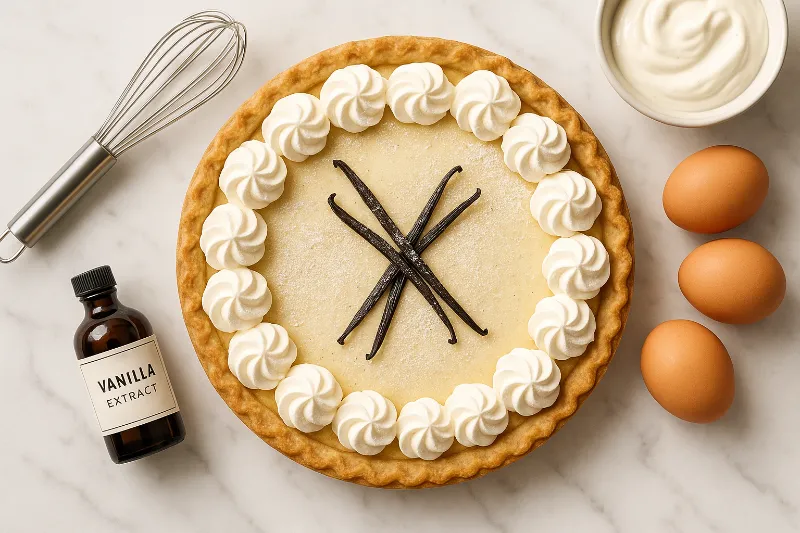
The vanilla custard filling is the pie’s defining element, traditionally made from whole milk, egg yolks, sugar, cornstarch for thickening, butter, and vanilla. The quality and type of vanilla used dramatically affects the final flavor. Pure vanilla extract provides reliable vanilla flavor, while vanilla bean paste offers visible vanilla bean specks and more complex flavor notes. The ultimate expression uses actual vanilla beans, which are split, scraped, and steeped in the milk, delivering unparalleled depth and aroma. Madagascar Bourbon vanilla beans provide rich, creamy vanilla flavor, while Tahitian vanilla offers floral notes, and Mexican vanilla contributes a spicier, woodier character.
The custard’s texture relies on the proper ratio of egg yolks to cornstarch. Egg yolks provide richness and contribute to setting, while cornstarch ensures the filling achieves the correct consistency for clean slicing. Too much cornstarch creates a gluey texture, while too little results in a loose filling that doesn’t hold its shape. The addition of butter after cooking enriches the custard and gives it a silky, luxurious mouthfeel.
The whipped cream topping should be lightly sweetened to avoid competing with the vanilla custard’s delicate flavor. Some bakers incorporate a small amount of vanilla into the whipped cream to create a unified vanilla experience throughout the pie. The topping must be fresh and generously applied, providing a light, airy contrast to the dense, creamy custard beneath.
Preparation Techniques and Mastery
Creating an exemplary vanilla cream pie requires meticulous attention to detail at every stage. The process begins with preparing the pie crust, which must be rolled evenly, fitted without stretching, and blind-baked with weights until fully golden. Underbaking results in a soggy bottom crust, while overbaking can make it tough and overly brown. The baked crust must cool completely before filling to maintain its crispness.
The custard preparation demands constant attention and precise technique. If using vanilla beans, they are split lengthwise and scraped, with both the seeds and pod added to the milk and heated gently to infuse the vanilla flavor before proceeding with the custard. The sugar, cornstarch, and salt are whisked together in a heavy-bottomed saucepan, then the milk (strained to remove vanilla pod if used) is gradually whisked in to create a smooth mixture. This mixture is cooked over medium heat with constant stirring until it begins to thicken and bubble.
The critical step is tempering the egg yolks. A small amount of the hot milk mixture is whisked into the beaten egg yolks to gradually raise their temperature without scrambling them. The tempered yolks are then returned to the saucepan and the mixture is cooked for another minute or two, stirring constantly. The custard must reach a full boil and be cooked briefly after thickening to fully activate the cornstarch and eliminate any starchy taste. Undercooking results in runny filling, while overcooking can cause the eggs to curdle.
Once properly thickened, the custard is removed from heat and butter is stirred in until melted and fully incorporated. Vanilla extract is added at this stage if not using beans. The custard is immediately poured into the cooled pie shell and smoothed with an offset spatula. Plastic wrap is pressed directly onto the surface to prevent a skin from forming as it cools. The pie must refrigerate for at least four hours or overnight to set completely before topping with freshly whipped cream.
Regional Styles and Modern Interpretations
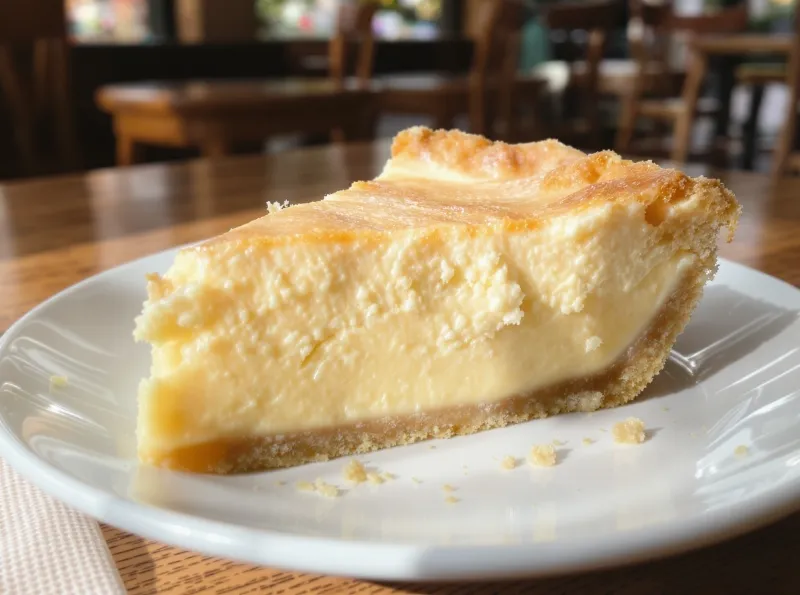
While vanilla cream pie maintains a fairly consistent form across America, subtle regional preferences and modern innovations have created interesting variations. In the South, some versions incorporate a thin layer of caramel at the bottom of the crust before adding the vanilla custard, creating a dulce de leche-like experience. This variation reflects the Southern affinity for caramel flavors and adds complexity without overwhelming the vanilla.
New England bakeries sometimes use a combination of milk and heavy cream in the custard for an even richer, more luxurious texture. Some Maine and Vermont versions incorporate maple syrup into the custard, adding a subtle regional flavor that complements rather than competes with the vanilla.
French-influenced versions, particularly popular in Louisiana and areas with strong French culinary traditions, may incorporate a small amount of dark rum into the custard, echoing classic French pastry cream preparations. This adult variation adds depth and complexity while remaining recognizably vanilla cream pie.
Modern artisan interpretations include versions using multiple types of vanilla beans to create complex vanilla profiles, or incorporating vanilla bean paste for intense flavor and visual appeal from the vanilla specks throughout the custard. Some contemporary bakers create deconstructed versions with individual tart shells or mason jar presentations. Salted vanilla cream pie has emerged as a trendy variation, with sea salt incorporated into the custard or sprinkled over the whipped cream, adding a savory note that enhances the vanilla’s sweetness. Vegan versions use coconut milk or oat milk with cornstarch, vanilla, and plant-based butter to create surprisingly authentic vanilla cream pies suitable for dairy-free diets.
Serving Traditions and Pairings
Vanilla cream pie should be served well-chilled to maintain the custard’s proper consistency and enhance its refreshing qualities. Clean slicing requires a sharp knife dipped in hot water and wiped dry between cuts, ensuring each slice displays distinct, intact layers of crust, custard, and cream.
This pie pairs exceptionally well with coffee, particularly medium roast varieties that complement rather than overpower the delicate vanilla flavor. Tea, especially Earl Grey or vanilla-scented black teas, also makes an excellent accompaniment. For special occasions, consider serving it with champagne or sparkling wine, whose bubbles and acidity cut through the richness of the custard. Some prefer a small glass of dessert wine such as Sauternes or late-harvest Riesling, whose honeyed notes harmonize with the vanilla.
The pie’s elegance makes it suitable for formal occasions such as wedding receptions, anniversary dinners, and holiday celebrations, yet it’s equally at home at casual family gatherings and church suppers. Its neutral color and simple appearance provide an excellent canvas for seasonal garnishes—fresh berries in summer, candied violets in spring, or caramel drizzle in fall. Individual servings in tart shells make elegant plated desserts for restaurant service.
Storage Best Practices
Due to its perishable dairy and egg content, vanilla cream pie must be refrigerated whenever not being served. The pie should be loosely covered with plastic wrap or stored in a pie keeper to protect it from absorbing refrigerator odors while preventing the whipped cream from being crushed or damaged.
With whipped cream topping, the pie keeps for 2-3 days refrigerated, though the cream begins to weep and deflate after 24 hours. For best quality, add whipped cream topping just a few hours before serving. The custard-filled crust can be prepared a day in advance, covered tightly with plastic wrap pressed directly on the custard surface, and refrigerated until needed.
Freezing is not recommended for vanilla cream pie, as the custard’s texture becomes grainy and may separate upon thawing. If necessary, the baked, cooled crust can be frozen for up to one month, well-wrapped, then thawed and filled with fresh custard when ready to serve.
Troubleshooting and Problem Solving
Common issues with vanilla cream pie are usually easily corrected with proper technique. Lumpy custard typically results from inadequate whisking during cooking or from scrambled egg yolks. Constant, vigorous whisking while cooking and proper tempering of the egg yolks prevents this problem. If lumps do form, immediately strain the custard through a fine-mesh sieve before pouring it into the crust.
Runny custard that fails to set properly indicates undercooking or incorrect thickener measurements. The custard must reach a full, rolling boil and be cooked for at least one to two minutes after thickening to fully activate the cornstarch. Always use proper measuring techniques and level measurements for accuracy.
A soggy crust results from filling it while still warm or from insufficient blind-baking. The crust must be fully baked until deep golden brown and completely cool before adding custard. Brushing the baked crust with a thin layer of melted white chocolate creates a moisture barrier that helps keep it crisp.
Conclusion
Vanilla cream pie stands as a testament to the beauty of simplicity and the importance of quality ingredients and proper technique in baking. Its pure vanilla flavor and silky texture offer a refined dessert experience that has enchanted Americans for over a century. From its origins as a showcase for precious vanilla to its current status as a classic diner staple and artisan bakery specialty, vanilla cream pie continues to represent the pinnacle of cream pie artistry. Whether served at an elegant celebration or a casual family dinner, this timeless pie delivers understated elegance and pure vanilla pleasure in every perfectly crafted slice.
