Peach Pie – History, Cultural Significance, Essential Ingredients, Cooking Tips
Peach Pie – History, Cultural Significance, Essential Ingredients, Cooking Tips
“A perfect peach pie is summer captured in a single slice.”
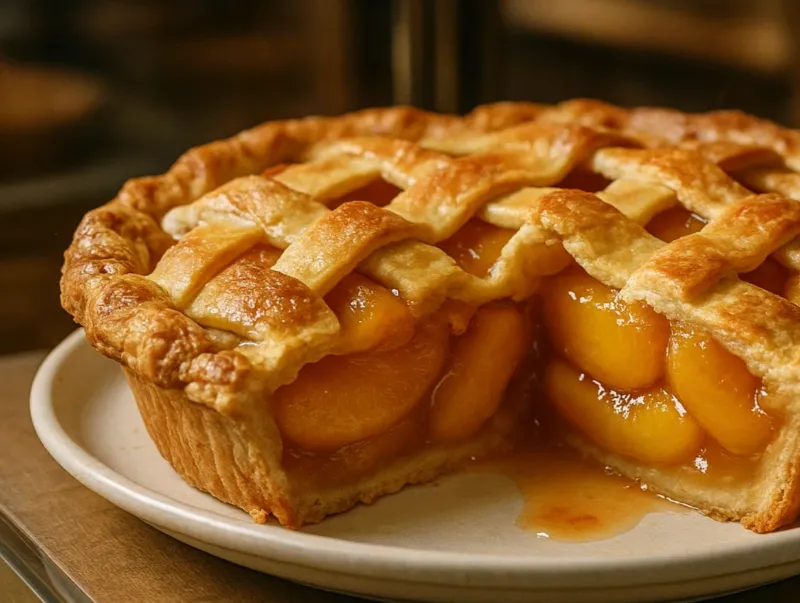
Peach pie is the essence of summer baking, featuring sweet, juicy peaches enveloped in a buttery, flaky crust. When made with ripe, fragrant peaches at their seasonal peak, peach pie delivers an incomparable taste of sunshine and warmth that epitomizes the best of American fruit pie tradition.
Table of Contents
History and Cultural Significance
Peaches originated in China over 8,000 years ago and traveled along the Silk Road to Persia (modern-day Iran), giving them their scientific name, Prunus persica. Spanish explorers brought peaches to the Americas in the 16th century, where they thrived in the southeastern United States’ climate.
Georgia earned its nickname “The Peach State,” though South Carolina, California, and New Jersey actually produce more peaches commercially. Regardless of production numbers, the South embraced peach pie as a culinary symbol, and it remains deeply associated with Southern hospitality and home cooking.
Peach pie became an American standard in the 19th century when peach orchards flourished across the growing nation. The dessert represented agricultural prosperity and seasonal celebration, often appearing at summer church socials, county fairs, and family gatherings.
Selecting Perfect Peaches
Varieties
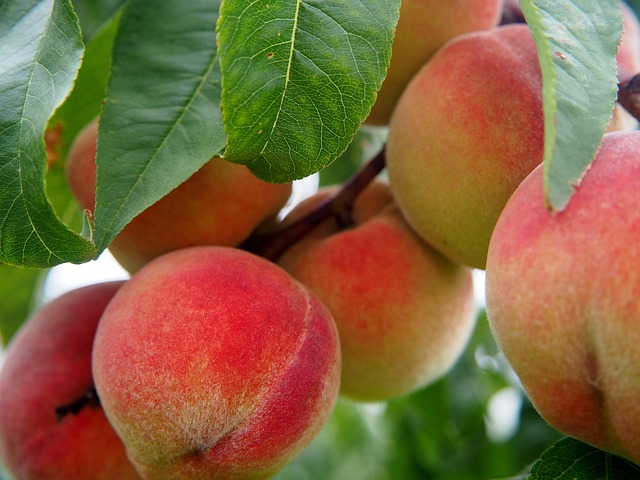
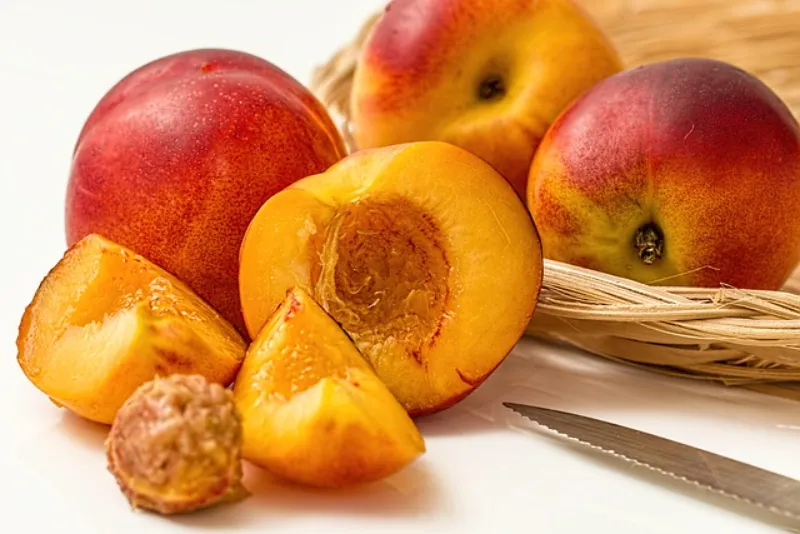
Freestone peaches are ideal for pie because the flesh separates easily from the pit, making preparation much simpler. Popular freestone varieties include Elberta, O’Henry, and Redhaven. These ripen in mid to late summer.
Clingstone peaches have flesh that clings to the pit, making them tedious to prepare for pie. They’re better suited for canning or eating fresh.
White peaches are less acidic and sweeter than yellow peaches, creating a more delicate-flavored pie. Yellow peaches provide a more traditional, robust peach flavor with balanced sweetness and acidity.
Ripeness Indicators
Perfect peach pie requires perfectly ripe peaches. Look for:
- Fragrance: Ripe peaches smell intensely peachy, sweet, and inviting
- Give: Gentle pressure should yield slightly without mushiness
- Color: The background color (not the red blush) should be creamy yellow or golden, not green
- No green tinge: Any green coloring indicates underripe fruit that won’t soften properly
- Avoid hardness: Rock-hard peaches won’t ripen properly and lack flavor
Peaches can ripen at room temperature if picked mature but not yet soft. Place them in a paper bag with a banana or apple to speed the process.
Preparation Essentials
Peeling Peaches
While some bakers leave peach skins on for rustic texture and nutritional benefits, most peel peaches for pie to ensure tender, smooth filling and prevent toughness. The blanching method makes peeling effortless:
- Score an X on the bottom of each peach
- Boil water in a large pot
- Drop peaches in boiling water for 30–60 seconds
- Transfer immediately to an ice bath
- The skins will slip off easily once cooled
Preventing Browning
Peaches oxidize quickly once cut, turning an unappealing brown. Toss sliced peaches immediately with lemon juice (2–3 tablespoons per 5 cups of fruit) to prevent discoloration. The acidity also brightens flavor and balances sweetness.
Managing Moisture
Peaches release significant juice during baking, making soggy crust a common problem. Combat excess moisture by:
- Using adequate thickener (4–5 tablespoons cornstarch or tapioca)
- Macerating peaches with sugar for 30 minutes, then draining and reducing the extracted juice
- Adding tapioca pearls or breadcrumbs to the bottom crust as a moisture barrier
- Pre-baking the bottom crust for 10 minutes
Essential Ingredients
The Filling
- Peaches: 6–7 medium peaches (about 3 pounds), yielding 5–6 cups sliced
- Sugar: ¾ to 1 cup, depending on peach sweetness
- Thickener: 4–5 tablespoons cornstarch or tapioca starch
- Lemon juice: 2–3 tablespoons for brightness and browning prevention
- Spices: ½ teaspoon cinnamon, ¼ teaspoon nutmeg (optional)
- Vanilla: 1 teaspoon extract enhances peach flavor
- Salt: ¼ teaspoon to enhance all flavors
- Butter: 2 tablespoons dotted on filling before adding top crust
Flavor Additions
Almond extract (¼ teaspoon) has a natural affinity with stone fruits and dramatically enhances peach flavor without tasting strongly of almond.
Bourbon (1–2 tablespoons) adds warmth and complexity, particularly popular in Southern-style peach pie.
Ginger (½ teaspoon fresh grated) provides spicy warmth that complements peach sweetness beautifully.
Baking Techniques
Peach pie typically bakes at 425°F (220°C) for 20 minutes to set and brown the crust, then reduces to 375°F (190°C) for 40–50 additional minutes. The pie is done when filling bubbles vigorously through vents and the crust is deeply golden brown.
Because peaches are so juicy, expect some bubble-over. Always bake on a foil or parchment-lined baking sheet to catch drips. Peach juice burns quickly and creates difficult-to-remove oven stains.
Allow the pie to cool for at least 4 hours before slicing. The thickener needs time to set, and hot peach filling is dangerously hot and liquidy. Many bakers prefer making peach pie the day before serving, allowing overnight cooling for optimal slicing texture.
Crust Variations
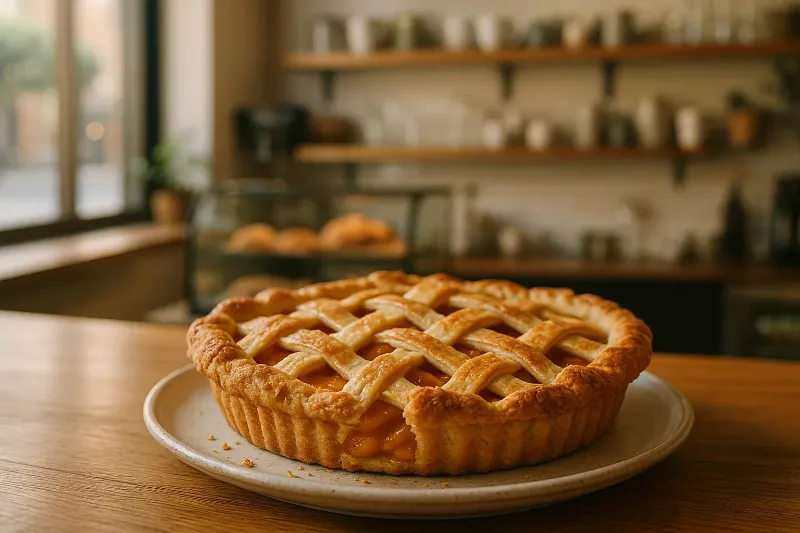
Lattice Top
The classic presentation for peach pie, allowing the golden-orange filling to peek through while providing adequate steam vents. The woven lattice is both functional and beautiful.
Crumb Topping
A streusel topping (butter, flour, sugar, sometimes oats) creates delicious texture contrast and is easier than lattice work. This variation is sometimes called Peach Crumble Pie.
Single Crust
A galette-style open tart with rustic folded edges showcases peaches with minimal fuss, perfect for beginner bakers or casual summer entertaining.
Regional and Creative Variations
Southern Peach Pie
Often includes bourbon or brandy in the filling and may feature a splash of vanilla. Some versions add a thin layer of cream cheese beneath the peaches for richness.
Ginger Peach Pie
Incorporates fresh grated ginger and crystallized ginger pieces, creating sophisticated warmth. Some versions add cardamom for exotic aromatic notes.
Peach Blueberry Pie
Combines peaches (75%) with blueberries (25%) for beautiful color contrast and complementary flavors. The berries add visual interest and slight tartness.
Brown Butter Peach Pie
Uses browned butter in both the crust and dotted on the filling, adding nutty depth and complexity that elevates simple peach flavor.
Serving Suggestions
Peach pie shines when served slightly warm or at room temperature. Classic accompaniments include:
- Vanilla ice cream: The timeless pairing that never disappoints
- Bourbon whipped cream: Adds Southern flair and sophistication
- Buttermilk ice cream: Tangy richness that complements sweet peaches
- Caramel sauce: Adds luxurious sweetness and silky texture
- Crème fraîche: French-style serving with slight tang
Peach pie makes a stunning ending to summer barbecues, outdoor celebrations, or family dinners. Its golden color and intoxicating aroma announce summer’s peak abundance.
Storage and Make-Ahead
Peach pie stores at room temperature for 2 days, refrigerated for up to 4 days, or frozen for 3 months. The filling can become slightly watery upon refrigeration as starches retrograde, but reheating at 350°F (175°C) for 15 minutes helps restore texture.
Unbaked peach pies freeze excellently. Assemble completely, freeze solid, wrap tightly in plastic and foil, and freeze for up to 3 months. Bake directly from frozen, adding 20–25 minutes to the usual baking time.
Frozen and Canned Peaches
While fresh peaches at peak season create the best pie, frozen and canned peaches offer off-season options. Frozen peaches work well—use them unthawed and increase thickener by 1 tablespoon to compensate for extra liquid.
Canned peaches in light syrup can make acceptable pie. Drain thoroughly (reserve syrup for other uses) and reduce sugar in the recipe by ¼ to ⅓ cup to account for the sweetened canning liquid. The texture will be softer and less vibrant than fresh, but the pie will still be delicious.
Nutritional Profile
A slice of peach pie (one-eighth of a 9-inch pie) contains approximately 320–400 calories. Peaches themselves are nutritious, providing vitamins A and C, potassium, dietary fiber, and antioxidants including beta-carotene and lutein.
The natural sugars in ripe peaches mean you can often reduce added sugar compared to tart fruit pies, making peach pie somewhat less calorie-dense than cherry or apple pie when made with similar crust.
Tips for Perfect Peach Pie
Use ripe peaches only: Underripe peaches won’t soften properly during baking and lack the sweet, intense flavor that makes peach pie special.
Don’t skip the lemon: Lemon juice prevents browning, adds brightness, and balances peach sweetness. It’s essential, not optional.
Thicken adequately: Peaches are very juicy. Err on the side of more thickener rather than less to avoid peach soup.
Cool completely: Patience is crucial. Cutting into hot pie yields a liquidy mess despite proper thickening.
Celebrate the season: Save peach pie for peak peach season (July–August in most regions). Off-season peaches lack flavor and won’t create memorable pie.
Conclusion
Peach pie embodies everything wonderful about summer baking—the perfume of ripe fruit, the warmth of the oven on a summer evening, the joy of sharing something made from the season’s best offerings. It’s a pie that demands attention and rewards it with layers of flavor and texture that capture summer at its absolute peak.
Whether served at a backyard gathering with vanilla ice cream melting into warm filling, or enjoyed as a quiet afternoon treat with nothing but a fork and gratitude, peach pie reminds us that the simplest pleasures are often the most profound. It’s summer on a plate, made with love and enjoyed with pure, uncomplicated happiness.


